Have you ever noticed how your gasping puppy snorts and imagined that it was a little steam engine? Although panting is one of those iconic dog behaviors, the equivalent of tail wags and nose boops, it is not necessarily always about being hot or breathless. Learning about the reasons why dogs pants will help you interpret the body language of your pet and know when it is a normal cooling process or when it is time to make an appointment with the veterinarian.
Panting is a natural and very necessary behavior of dogs to maintain body temperature, but excessive or abnormal panting may be indicative of health problems. What do you think your dog may be trying to tell you when it starts panting, and when you need to take your dog to the vet?
Table of Contents
What Is Panting In Dogs?
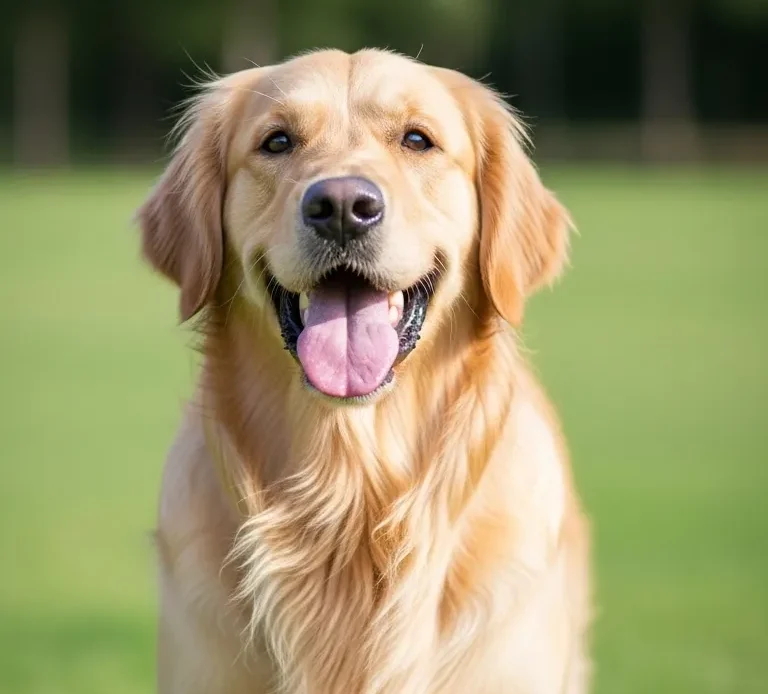
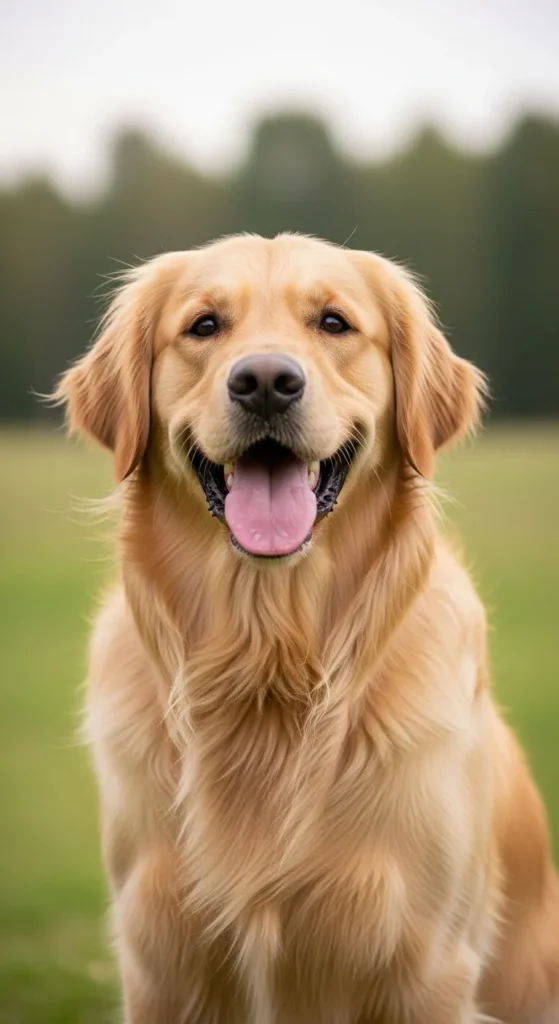
Panting refers to the cooling mechanism of a dog when it is hot, excited, or working hard. Dogs do not sweat through their skin the way that humans do, but they cool themselves in most cases by evaporating moisture on their tongues and respiratory tracts. When your dog breathes raggedly, the dog quickly inhales and exhales with an open-mouthed breathing pattern, and this makes the dog cool down. Normal panting typically:
- Occurs following play, walking, or exposure to warm weather.
- Has a monotonous rhythm and an open, relaxed mouth.
- No more stops as your dog cools or settles.
Why It Matters For Dogs
Panting is not a cute background noise; it is an essential life process. Panting plays a significant role in dogs to avoid the occurrence of heatstroke, which is a severe ailment that may be terminal without intervention. It is also one of the most observable hints of the health of your dog, both emotionally and physically.
Note what is normal and abnormal to your pet, and you will be able to notice when something is wrong in time, such as pain, anxiety, or even a disease.
Common Causes Of Dog Panting
We will discuss the most popular causes of dogs’ panting, both the usual and the severe.
1. Thrombodynamics (Heat Control)
Panting is mostly done to cool down. Dogs are unable to perspire like humans and thus they make use of the panting method to dispel body heat. Breeds that have shorter muzzles, such as Bulldogs, Pugs, and Cavalier King Charles Spaniels, do not do so well at this and may easily overheat.
2. Exercise or Excitement
Temporary panting is induced by physical activity or excitement of another emotion (such as meeting you at the door!). This is absolutely normal, and it should come to an end when your dog relaxes.
3. Stress or Anxiety
Panting may also be a behavioral reaction to stress, fear, and nervousness. You may observe this in the car ride, thunderstorms, or the visit to the vet. In the process, other signs such as pacing, whining, or trembling can also be accompanied.
4. Pain or Discomfort
A dog in pain- particularly when diseased, such as with arthritis, dental problems, or internal ailments- may pant too often even when at rest. This type of panting normally occurs in isolation and is accompanied by other minor indications such as restlessness or repeatedly licking up parts of the body.
5. Heart or Respiratory Issues
The persistent panting can be a symptom of heart disease or respiratory problems, especially when you have a dog that gets out of breath, coughs, or finds it hard to breathe. Panting and difficult breathing have been known to be brought about by conditions like congestive heart failure or laryngeal paralysis.
6. Obesity
The fat dogs tend to breathe in a lot of heat due to the additional fat serving as a beneficial insulation, making it difficult to cool down and breathe easily.
7. Medication Side Effects
Some drugs, steroids, and pain killers, among others, have the side effect of causing panting. It is always important to be on the lookout with your vet in case panting begins following a new prescription.
8. Heatstroke or Overheating (Emergency!)
Drooling, vomiting, or disorientation, or heavy panting, frantic panting of your dog may indicate heatstroke, a medical emergency in veterinary medicine.
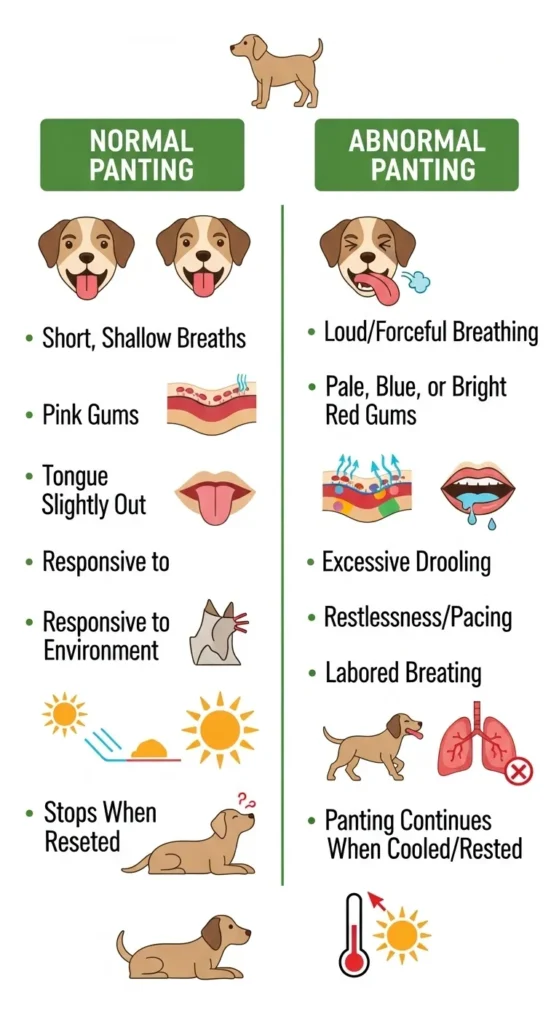
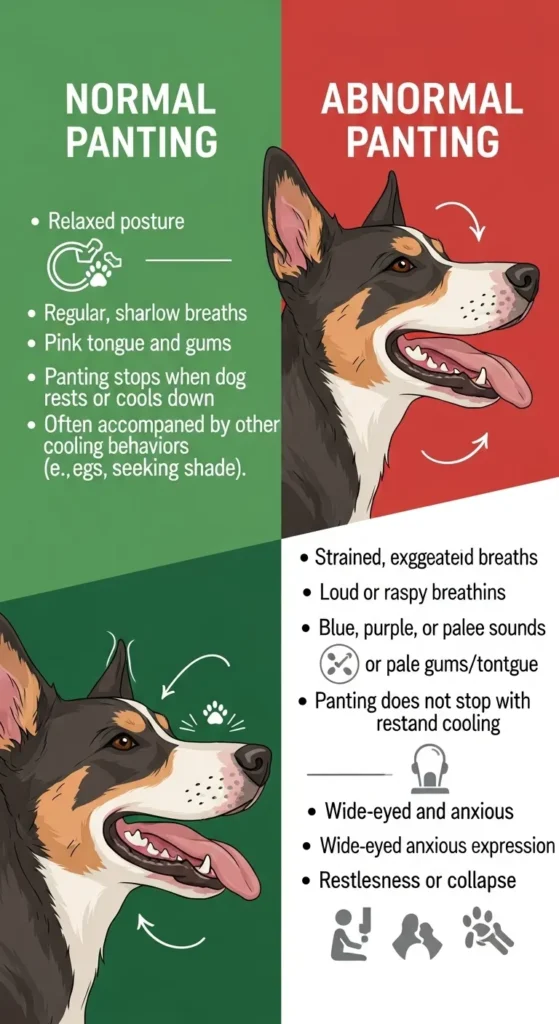
Symptoms that Panting can be a deviation.
Now, I should be concerned whether panting is different from what it should be. Warning signs include:
- Too much saliva drool or foamy saliva.
- Shallow breaths on resting or Rapid breathing.
- Pale, blue, or bright red gums
- Whining or signs of distress
- Slowness, failure, or disorientation.
- Panting takes place constantly in hot conditions.
In case of any of these, then proceed to the veterinary.
How To Help A Panting Dog
1. Keep Them Cool
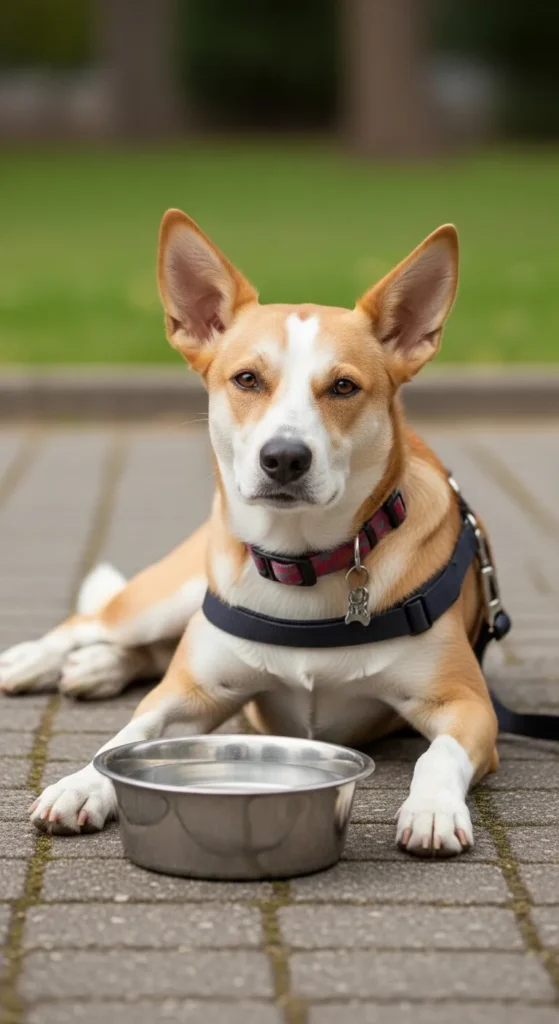
Always keep your dog in the shade and fresh water. In the house, fans or air conditioning can be used to assist in controlling the temperature. Exercise should be avoided in the hot season.
2. Manage Weight
Being at a healthy weight means that you will not place significant loads on the heart, lungs, and joints. Request your vet to advise on what diet and quantities to feed your dog in accordance with his/her size and breed.
3. Reduce Stress
In case the anxiety leads to panting, please establish a relaxing atmosphere. Play positive, rewarding music, and use familiar toys during stressful events. Some of them are anxiety supplements or training of their behavior suggested by your vet.
4. Schedule Regular Vet Visits
Routine examinations are used to check on the heart, lung, or endocrine problems early enough before panting is a significant symptom.
5. Heatstroke (Emergency Cooling)
If you suspect overheating:
- Take your dog to a cool, shady place.
- Offer small sips of water.
- Wash their feet and tummies with cool (not cold) water.
- Emergency care is required in a veterinary clinic.
Vet Insights / Expert Notes
Veterinarians based in the American Kennel Club (AKC) and VCA Animal Hospitals believe that panting is generally not harmful, but it is always necessary to consider it. Relaxed panting after athletic activity is (under most circumstances) normal–however, when panting persists or labors during relaxation, then it is a cause of concern.
According to Dr. Jerry Klein, who is the chief veterinary officer of AKC, it is important to know the normal breathing rate of your dog so that you can readily notice abnormal changes.
Common Mistakes To Avoid
- The assumption is that all the panting is normal.
- Dogs cannot be exercised in high temperatures.
- Keeping dogs in cars- even in the short run.
- Cooling overheated dogs with ice-cold water (can shock the system).
- This is neglecting the pointers of stress or pain.
FAQ’s
Aren’t all dogs equal in the amount of panting?
No. There is an effect on the frequency of panting because of breed, age, and health. The short-nosed dogs (Brachycephalic) breathe more because their airways are smaller.
Is it something to be concerned about my dog panting at night?
Panting during the night may be an indication of pain, anxiety, or disease. In case of frequent occurrence of it, make a vet check.
Does a dog have to be panting in pain?
Yes. Dogs also tend to excessively pant when they are in pain or suffering, or when they are not exercising.
What is regular and too much panting?
Regular exhaling is terminated when your dog calms down. Panting is excessive even in cool and serene weather or appears strained.
How can I prevent heatstroke?
Midday walks should be avoided, water should always be offered, and dogs should not be left in hot places.
Closing Thoughts
It is one of those natural things that your dog does, though it is also a window into his or her well-being. When you know what is normal for your pup and you can see when they are going through a tough time early, you can keep them safe, relaxed, and happy wagging well long into their future.