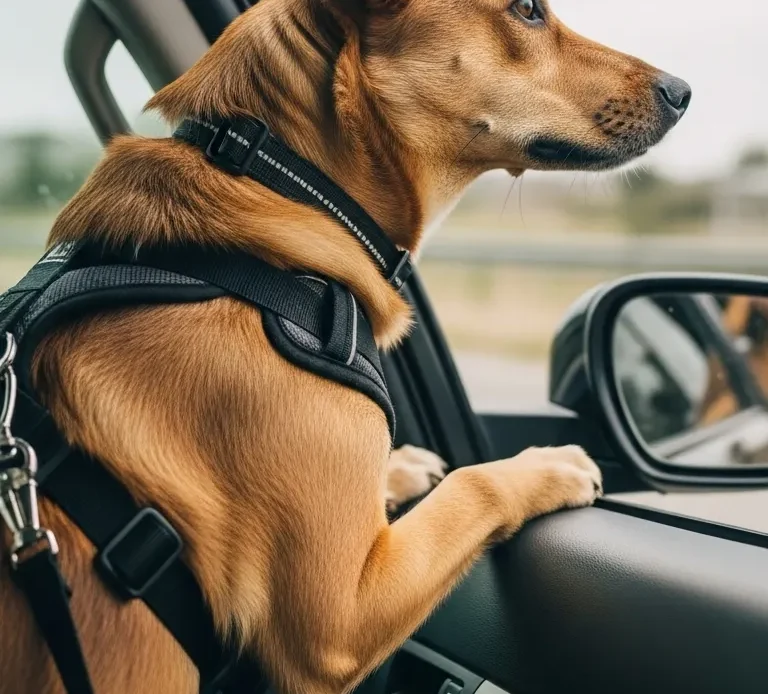
When I first made attempts to take my dog on a car ride, it was messy stuff, paws on the dash, noseprints on the window and enough nervous whining. The process of training a dog to ride in a car may be an adventure on its own. You can take your dog to the vet, the park or a family outing, but once you learn to teach your dog to ride in a car safely and in a calming manner, then it will be a game-changer for both of you. Driving does not necessarily need to be stressful; it can turn out to be something that your pup really likes, with the proper approach, patience and preparation.
Table of Contents
What Is Dog Car Ride Training?
The training of your dog to ride in the car is called car ride training, and it involves making your dog feel safe, relaxed, and well-behaved during the car trips. It is a kind of good conditioning – training your dog that the car is a nice and pleasant place to be in. The training may be split into short sessions, positive reinforcement (such as treats or compliments) and making sure the dog is safe physically with the help of harnesses or travel crates.
Why It Matters for Dogs
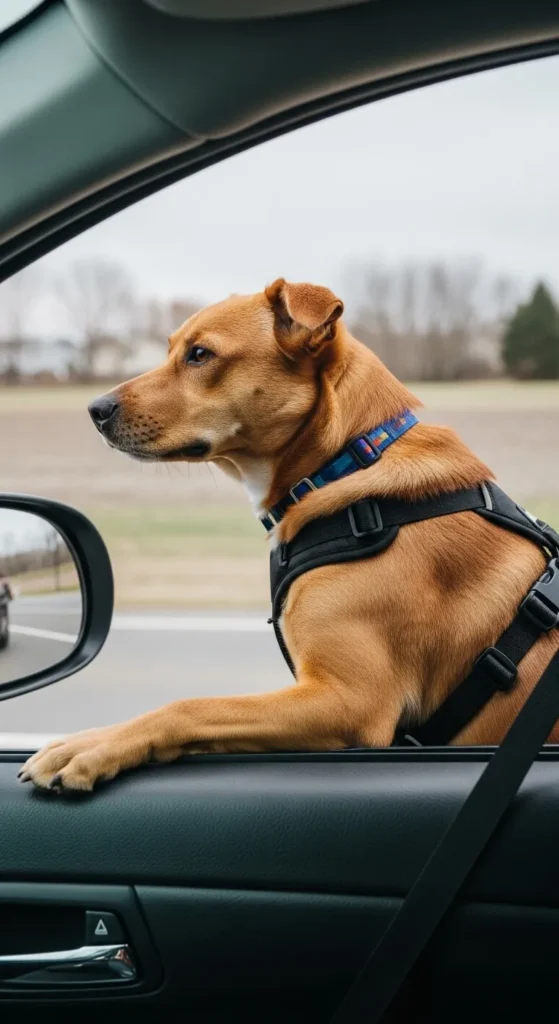
To a large number of dogs, the car does not represent a means of travel; it represents a new world filled with sound, movement and smell. In the absence of appropriate training, it may cause anxiety, nausea or even fear-based behaviour. The American Kennel Club (AKC) and VCA Hospitals suggest that exposure to car travel should be gradual and designed positively to make dogs learn to ride in cars without thinking of dread and danger, but rather to feel comfortable and safe.
Car ride training also:
- Eliminates motion sickness and anxiety.
- Enhances the security of the dog and the driver.
- Trains dogs to visit, be groomed, and travel with their owner.
- Bonds your relationship with your dog.
Knowing the Reasons: Why Dogs in Car Rides Scare Some Dogs.
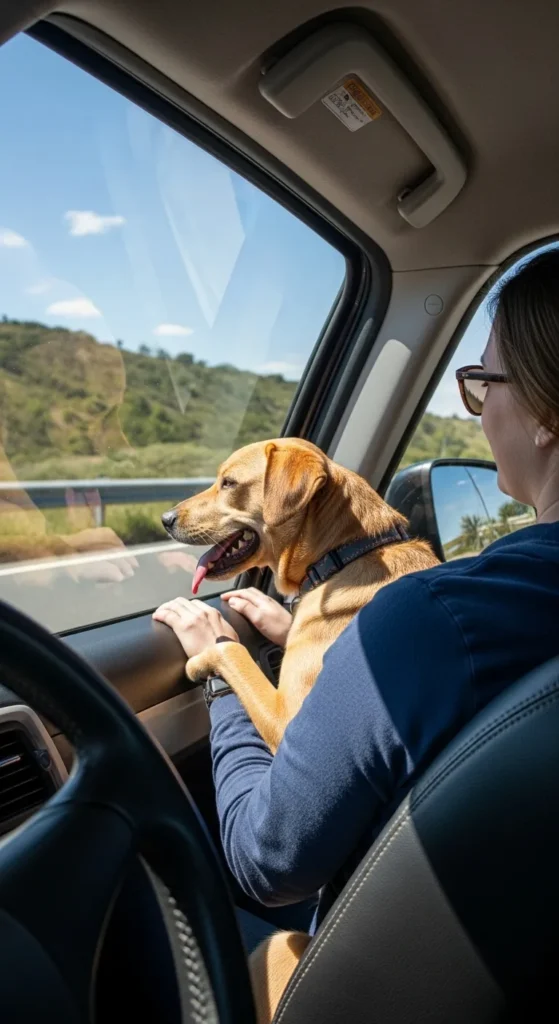
It is only useful to know why your dog does not like car rides before you start training it to like them. Common causes include:
- Failure to be introduced to cars early: Puppies who are not exposed to cars at an early age will be intimidated by cars.
- Motion sickness: Rapid movement will disturb the balance of a dog and its stomach.
- Negative associations: When all car journeys result in the vet, one can develop fear.
- Sensory overload: Noises, vibrations, and strange smells are threatening.
- According to behaviour experts at PetMD, these fears can be overcome by slow and steady training and positive reinforcement for most dogs.
Symptoms of Your Dog Being Perturbed in the Car.
In case your dog does not ride well in the car, you may observe:
- Whining, panting, drooling or trembling.
- Refusal to enter the car
- Restlessness or pacing
- Too much barking or escaping.
- Motion sickness causes vomiting or drooling.
By being aware of these symptoms at the very first stage, you will be able to adjust your strategy and make sure that your dog is as stress-free as possible.
How I Trained My Dog to Ride in a Car: Step-by-Step Training Guide.
- Begin with Stationary Car Sessions: Firstly, you have to introduce your dog to the parked car. Allow them to play with it when the engine is turned off. Provide rewards and applause for quiet demeanour. This creates a favourable connection with the automobile space.
- Add Short, Calm Sessions: When your dog is relaxed in the house, get in the car and sit together, keeping the doors shut. Treat them, stroke them, and make them acquainted with the narrow room. Wait before you start the car, just get it to be a happy place.
- Introduce the Engine Sound: Keep the car engaged for a couple of minutes when it is parked. Give gifts and maintain a low level of voice. The exposure duration should be gradually expanded. Provided your dog is calm, reward him heavily; this is the step that fosters a sense of trust.
- Take Short Drives: Begin with a minute or two about the block. Finalise the ride with an entertaining place, such as a park or a short walk. Gradually increase time over a number of days or weeks.
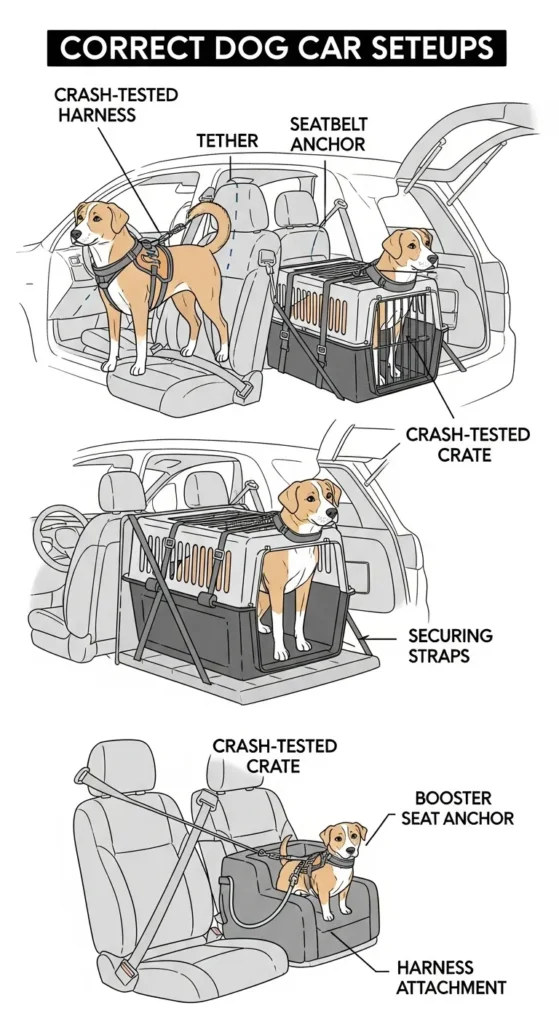
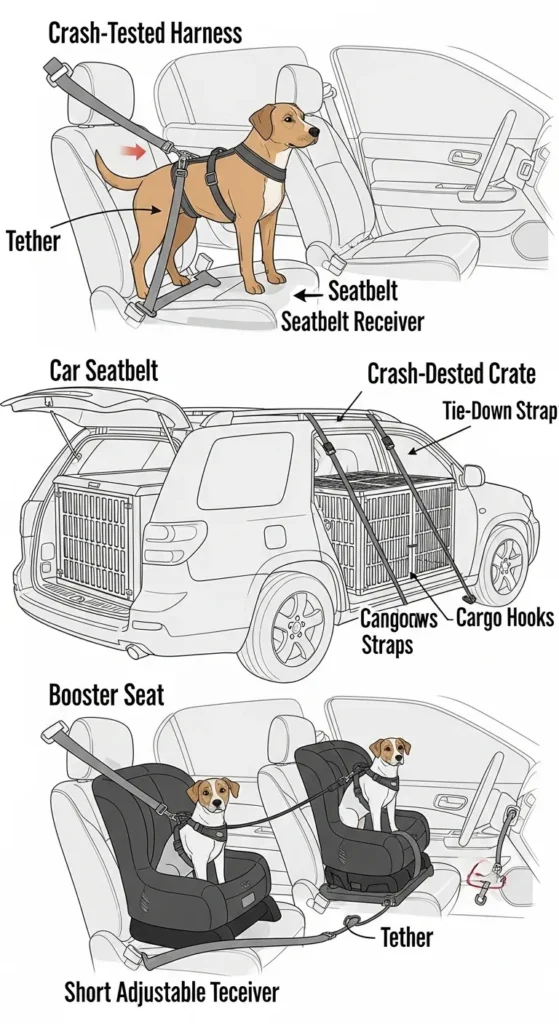
- Use Safety Equipment: Car harness or seat belt: This is used to ensure that dogs are safely contained and not distracted.
- Travel crate: This is suitable for smaller dogs; it helps to calm them down.
- Car barrier: This is excellent for large breeds in order to restrict movement.
Manage Motion Sickness
If your dog gets carsick:
- Sympathise with feeding just before the rides.
- Maintain the car at a low temperature and make it well-ventilated.
- You should use an elevated booster to make your dog see outside.
- Ask your vet regarding safe anti-nausea.
Keep Routine and Consistency.
Dogs learn by repetition just as human beings do. Short rides at regular times allow normalising the experience and gaining confidence over time.
Vet Insights & Expert Notes
Patience and gradual exposure are insisted on by veterinarians. The American Veterinary Medical Association (AVMA) states that:
- A dog that is frightened must never be forced into a car.
- Punishment should be avoided, and yelling corrections should be avoided, as this will cause more fear.
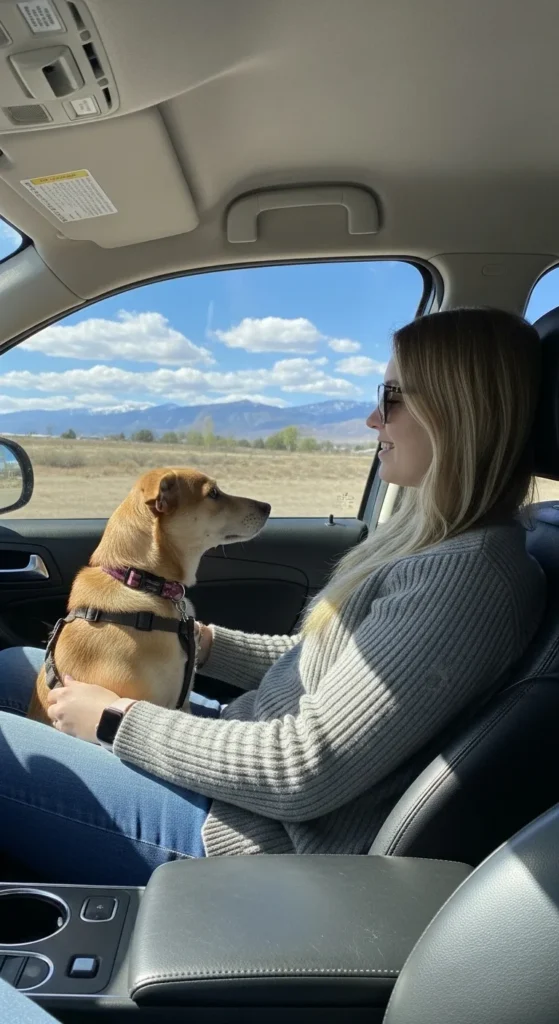
In the event of safety, then this should be considered a priority at all times, and dogs should not ever ride in the lap or in the open truck beds.
Positively reinforce all progress.
Another observation made by behaviourists is that dogs know how to learn by association: the more car rides are followed by something good (a visit to the park), the faster the behaviour will develop.
Common Mistakes to Avoid
- Cramming your dog in the car without his consent.
- Drives only to the groomer or the vet.
- Allowing your dog to ride without a leash.
- Little attention to motion sickness.
- Shouting or demonstrating anxiousness.
- Hurrying the training process.
Closing Thoughts
The point of training your dog to ride in a car is not just about trips or commuting, but it is about being able to trust, be confident and create memories together. Car rides might become a stressful event, but with patience, positive reinforcement and safety, they can change to a happy one in no time. Soon, your dog will be wagging their tail every time they hear your keys jingle.
Frequently Asked Question: How to Teach a Dog to ride in a car
What is the time taken to train a dog to be fond of the car?
It is based on the age of the dog, temperament and previous experiences. The majority of the dogs adapt in a few weeks after gradual and positive training.
How can the dogs be transported in cars in the safest way possible?
Wear a crash-tested harness, seat belt or travel crate. They not only ensure the safety of your dog, but they also help lower the distraction among the drivers.
Can puppies ride in cars?
Yes – early exposure, soft exposure is beneficial to avoid fear in future. Take little walks, and have puppies well tied up.
What if my dog gets car sick?
Take shorter journeys, do not eat in advance of rides and have air. In case the motion sickness persists, consult your vet about medication or natural remedies.
Does that mean that I should allow my dog to stick his head out through the window?
It’s best not to. Your dog can be hurt by flying debris or by stopping. Rather, leave windows ajar to be ventilated.