
Once your favorite dog begins to exhibit slight signs of differences, such as giving more cuddles, walking slower, or that warm glow of motherhood, it is a glimmering and thrilling moment. And along with the gladness comes the charge. Learning about the dog pregnancy, the very first signs of it, and the day when the puppies are born, you will be able to provide your dog with appropriate conditions and guarantee the safe birth of her puppies.
You may be a first-time pet parent or about to embark on this journey for the first time. Whatever you need to know, such as whether the animal is pregnant, the type of care required, nutrition, and how to prepare the pups, is covered in this guide, which includes all the veterinary knowledge, understanding, and caring instructions.
Table of Contents
What Is Dog Pregnancy?
Dog pregnancy (synonymous with gestation) refers to the duration of time that a female dog (bitch) has developing puppies in her uterus. Canine pregnancy takes an average period of 63 days, although it can vary from 58 to 68 days based on the size of the breed and the number of pups in a litter.

During this period, she is ready to give birth since her body is ready as a result of hormonal, physical, and behavioral changes. Every fetal stage, from fertilization to delivery, is crucial in the development of a healthy puppy.
The importance of Dog Pregnancy Care.
Care throughout pregnancy facilitates:
- Puppy growth – The health of the puppies during the prenatal period and their nutrition significantly affect their growth.
- The well-being of a mother is supported by a well-balanced diet, moderate exercise, and regular veterinary check-ups, which help decrease risks.
- Smooth birth (delivery) – Planning averts difficulties and pressure.
- Healthy recovery – The use of postpartum care ensures the restoration of strength and energy.
Pregnant dogs, when not given sufficient attention, may also suffer nutritional deficiency or infection, or delivery problems may arise, like dystocia (difficult birth).
Knowledge of Pregnancy Stages of a Dog.
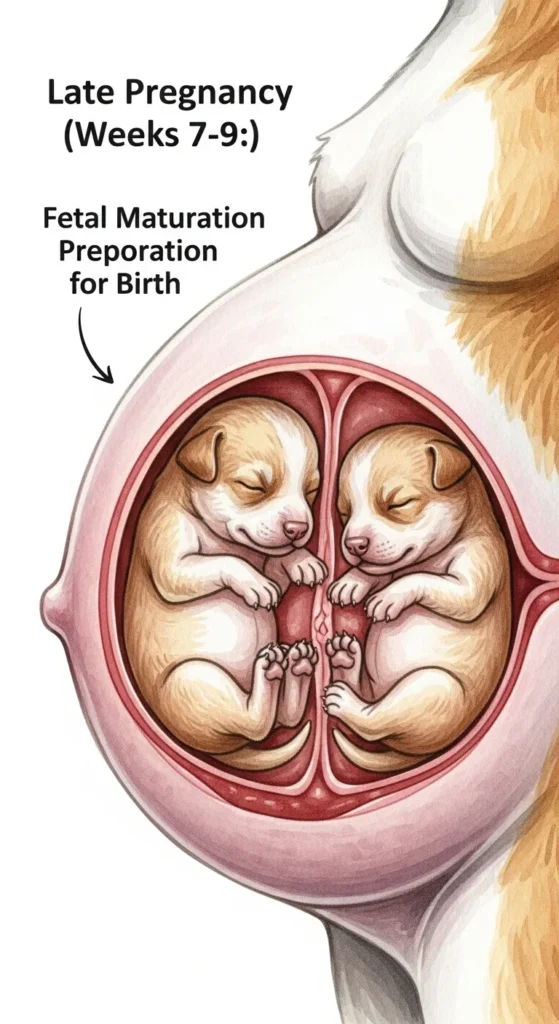
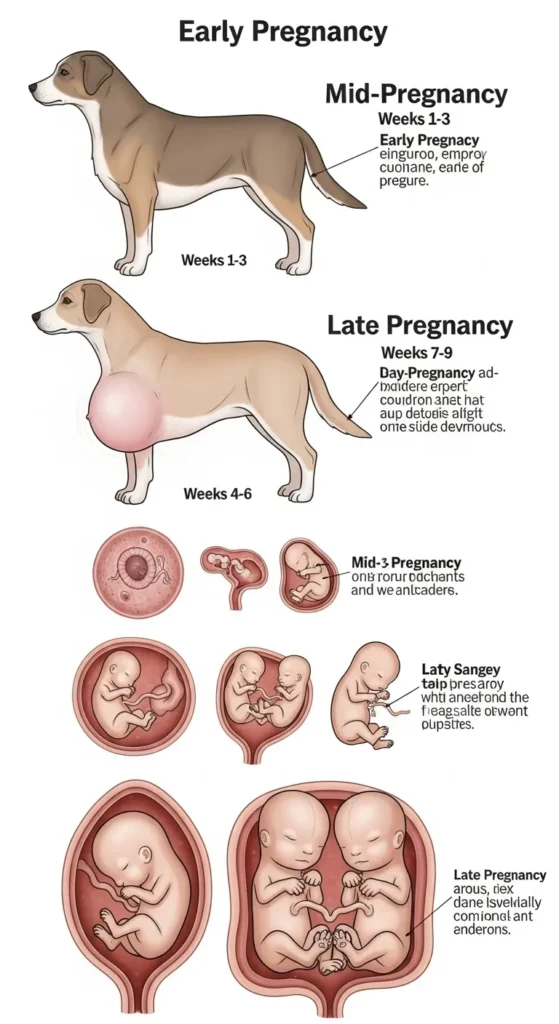
The overlapping of three trimesters in a dog’s pregnancy can be separated into 21 days.
- Weeks 1-3: Early Pregnancy
- The fertilization process takes place, and the embryos implant.
- Your dog might not have any obvious symptoms.
- Fraudulent vaccines, vigorous exercise, and stress should be avoided.
- Weeks 4-6: Mid Pregnancy
- Embryos develop fast; the formation of the fetus starts.
- Pregnancy is detected in the Vets through ultrasound (approximately day 25) or palpation.
- The appetite and weight begin to rise.
- Weeks 7-9: Late Pregnancy
- The stomach becomes very swollen.
- Fur is formed on puppies, and the movement can be felt.
- This is evident in nesting when your dog takes birth preparations.
Dogs: Signs and symptoms of a pregnant dog.
Early detection is also important to ensure that you have a pregnancy and to be cautious about how to handle it. Common indicators include:
- Physical Changes
- Nipples slightly enlarged (pinkish color also called pinking up).
- Slow weight increase, particularly since week 5.
- Firm, rounded abdomen
- Obvious vaginal discharge towards the end of pregnancy.
- Behavioral Changes
- Being more loving or clingy.
- In search of silent or solitary places.
- Less activity or increased sleeping.
- Possible mild morning sickness (I am not hungry, or I am vomiting earlier)
Veterinary Confirmation

- Ultrasound: Palpable at 3-4 weeks.
- X-ray: Counting puppies down after 45 days.
- Hormone test (Relaxin): 30 days or later, pregnancy is confirmed.
How to Care for a Pregnant Dog
- Veterinary Checkups: Schedule a checkup at an early stage of pregnancy to assess the condition and receive personalized advice. Frequent checkups would be used to track her weight, diet, and the puppy’s development.
- Nutrition & Diet:
- Provide a balanced quality dog food that has been certified by AAFCO to grow or procreate.
- It is not necessary to overfeed too young; being too fat may cause some problems.
- Gradually increase food consumption by 25-50% in the past 3-4 weeks.
- The last trimester should be changed to puppy food, as it contains additional calories and nutrients that are beneficial for the puppy’s growth and development.
- Ensure a constant supply of fresh water is available.
- Exercise: The light walks are effective, but they do not involve high-impact activity or rough play. Light exercise helps maintain muscle fitness and improves circulation.
- Parasite & Health Management: Administering any medications or flea preventatives should only be done after consulting your veterinarian. There are unsafe products during pregnancy.
- Create a Whelping Area:
- Prepare a snug, cozy, and peaceful nest.
- Washable bedding or whelping pads.
- It would be important to introduce her to the area weeks before the delivery to make her feel safe.
- Watch for Nesting Behavior: Your dog will scratch, dig, or rearrange bedding as delivery approaches. Calm her down and ensure that she is accustomed to the whelping area.
Advisor Notebooks, Pro Notes, and Insights.
The veterinary obstetrics experts and the American Veterinary Medical Association (AVMA) state that:
- Most dogs are capable of giving birth naturally.
- Minor breeds and small-headed breeds (as Bulldogs) are more likely to have complications at birth.
- Periodic veterinary checkups are necessary to monitor the health of the fetus and prevent infection.
- Do not take over-the-counter supplements or herbs without veterinary advice, as some may lead to miscarriage.
- The checks conducted during the postpartum period are essential to ensure that all pups have been born and the mother is recovering successfully.
Common Mistakes to Avoid
- Excessive intake of food during pregnancy.
- Taking human prenatal vitamins/supplements.
- Further discussion, omitting verifying veterinarians.
- Neglect of distress symptoms in labor.
- Allowing other pets to interact freely with other pets on time.
- Failure to establish a hygienic and peaceful birthing environment.

FAQ’s
How long are dogs pregnant?
It takes an average of 63 days from conception, but this timeframe may vary depending on the breed and litter size.
Do dogs conceive during the first heat?
Yes, but it’s not recommended. Young dogs are in the process of development, and early conception may result in health complications.
When is the right time to take a dog to the vet when pregnant?
Visit when you suspect you are pregnant, in the middle to have a check-up, and towards the due date to receive whelping advice.
What is the average number of puppies that dogs have?
The litter size varies – small breeds can have 1-4 puppies, while large ones can have 8-12 or more.
What are the symptoms of my dog getting into labor?
A major sign of the beginning labor process includes restlessness, nesting, panting, a drop in body temperature, and contractions.
Closing Thoughts
Pregnancy in dogs is a remarkable experience marked by love, care, and anticipation. By taking good care of her diet, engaging in mild exercises, and making frequent visits to the veterinarian, you can ensure that your dog delivers her puppies safely. All the waggles, nuzzling, and every minute heartbeat tell us how brilliant our relationship with our canine friends is.