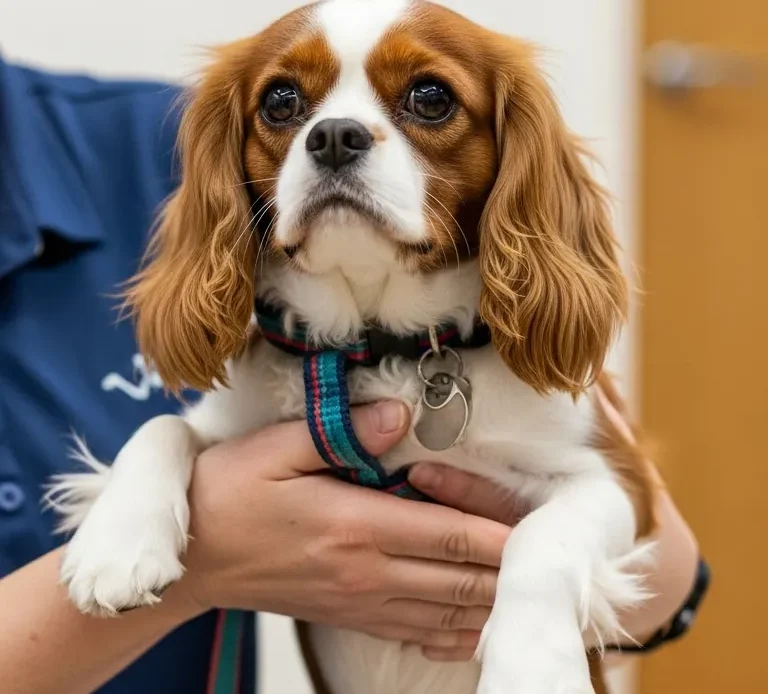
There are not very many things that can be so heart-wrenching as listening to a dog parent yelling at his or her beloved Cavalier King Charles Spaniel, which is also yelling with pain or fear when picked up. This is a rather docile, loving breed and is normally quite placid and trusting, and as a result, when your Cavalier suddenly screams, you are almost bound to question why.
When you pick up your Cavalier King Charles Spaniel and he yelps, you should not disregard this. Yelping may indicate pain, fear, or a medical condition. Knowing the cause of this response will reassure you and guarantee your dog’s good health. This paper will discuss the most prevalent causes, symptoms to avoid, and safe and approved methods of dealing with your Cavalier in a loving manner.
Table of Contents
What does it mean when a cavalier yells when picked up?
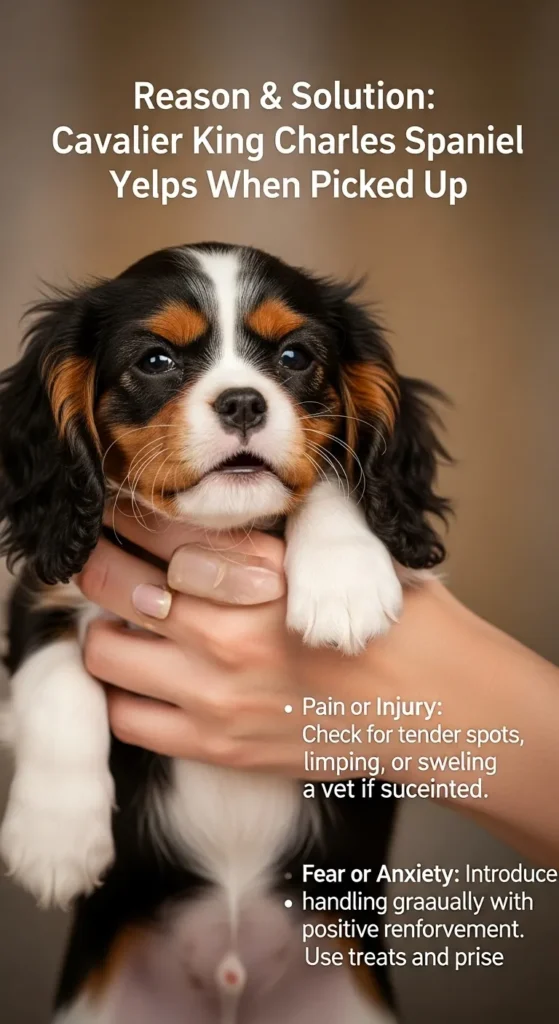
A yell from your dog is his way of saying that something is wrong. It is a sharp, high-pitched vocal, and it is usually caused by sudden pain, discomfort, or fear. In the case of Cavaliers, being sensitive and expressive, a yelp on lifting can indicate physical issues (such as pain in a joint or spine), emotional issues, or even shock of being handled too harshly.
One startled yelp may not be a cause of concern, but regular and severe responses should be taken into consideration, particularly since Cavaliers are more prone to some health conditions that make them more sensitive to touch.
Why Does It Matter for Dogs
Disregarding the pain reaction of a dog may enable the development of other underlying diseases. The continued yelp can lead to problems with the spine, pains in the joints, or muscle tension that can further develop when not treated.
In the case of the Cavalier King Charles Spaniels, this is especially significant due to the fact that they are genetically predisposed to the following conditions:
- Syringomyelia (SM) is a severe disease of the nervous system of the spine.
Hip dysplasia or patellar luxation – joint problems, which become painful when moved or lifted in the wrong way.
Ear infections – most Cavaliers have long ears and therefore, they may be sensitive around the neck and the head.
You save the comfort of your dog and avoid its chronic damage by attending to it at an early stage.
Often: The Reason Your Cavalier cries when you pick him up.
- Muscle or Joint Pain or Injury: Muscle or joint pains, or pain in the bones, are some of the major causes of yelping. In case your Cavalier jumped off of furniture, slipped, or was otherwise too rough, it is possible that they strained a muscle or bruised a rib.
- Back or Neck Problems (Syringomyelia or Disc Issues): Cavaliers are also prone to syringomyelia, which is a painful spinal disease that leads to the formation of fluid-filled cavities around the brain or the spine. This may result in sensitivity to touch around the neck or back. In the same way, intervertebral disc disease (IVDD) may be the cause of acute pain during lifting.
- Ear, Mouth, or Dental Pain: In case your cavalier cries when you pick him up by the head or ears, it could be ear problems or tooth problems. Even light treatment may hurt such conditions.
- Abdominal or Internal Pain: The yelp upon picking it up under the chest could indicate abdominal discomfort, bloating, or organ tenderness. Pressure on the belly can be very painful in the case of gastrointestinal problems or pancreatitis.
- Phobia or Adversarial Conditioning: Other times, yelp is not a result of pain, but fear. It is possible that your Cavalier has been scared of being lifted or otherwise mishandled in the past, so that it is now linked to something uncomfortable or unsafe, particularly when it is done too suddenly.
- Arthritis or Age-Linked Dissatisfaction: Arthritis may cause the joints of the older Cavaliers to become stiff and painful. Raising them without appropriate support may result in pain, particularly in the hips or spine.
Signs & Symptoms To Watch For

Should your Cavalier yelp when picked up, seek along with it the marks which will indicate some underlying malady:
- Does not want to be touched or to be held.
- Pain on walking (limping or stiffness).
- Shaking, trembling, or hiding
- Dismay to jump or climb stairs.
- The alteration of the appetite or sleep patterns.
- Crying, pacing, or over licking a single area.
- Aggression or avoidance of being approached.
In case these symptoms continue, a veterinary examination is necessary. To find the sources of pain, your vet can also use physical examination and X-rays, or neurological tests.
Solutions & Care Tips
- Visit Your Veterinarian First. Always start with a vet check. Although your dog may seem well at other times, you may find that he suddenly yelps, which is a tell-tale sign of some hidden pain. Describe:
- Whether or how it occurs (Each lift, only some ways).
- Which areas cause a reaction
- Any changes (falls, exercise, appetite) in the recent past.
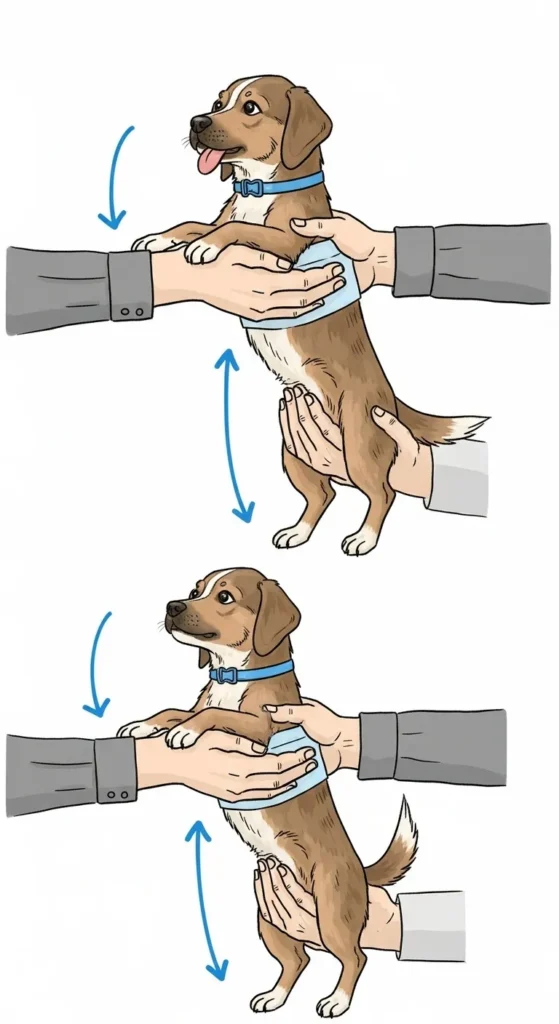
2. Apply Correct Lifting Technique: Your veterinarian may just be dealing with comfort, in case he or she examines your dog and declares him or her free of serious conditions. And here is the way to pull up a Cavalier:
- One hand is to support the chest, at the back of the front legs.
- With the other hand, hold the hindquarters under the rump.
- Lift gradually and bring it close to the body so that you can avoid straining.
- Do not pick your dog up by the arms of the body – this would cause injury to the muscles and joints.
3. Give Back Support and Joint Support: Unless your dog has severe arthritis or back pain:
- Orthopedic bedding should be used to support it.
- Install non-slip floors around the house.
- Get pet stairs or ramps so you do not jump on furniture.
- Check with your vet on joint supplements (such as glucosamine or omega-3s).
4. Control Suffering by Veterinary Treatment: In case your Cavalier is diagnosed with such a condition as syringomyelia or arthritis, your vet can prescribe:
- Analgesic (NSAIDS, gabapentin)
- Physical or hydrotherapy.
- Weight management plans
- Changes in lifestyle (no rough playing or high-impact activity)
5. Rebuild Trust and Comfort: To those of you who are timorous or nervous of your horses, mild desensitization is the answer:
- Bring gifts as you go round.
- Touch slowly, and then raise a little, and recompense quiet action.
- Never forcibly make a tryst, accept you, Cavalier.
- In the long run, they will come to know that being picked is not a bad thing.
Vet Insights
According to the veterinary specialists, yelping is not a behavioral issue, but it is an expression of pain or discomfort. According to Clare Rusbridge, a prominent neurologist who has made a study of the Cavalier King Charles Spaniels, syringomyelia is frequently manifested by sensitivity in the area of the neck or shoulders.
Take into account such common professional recommendations:
Neurological or orthopedic pain should always be eliminated.
- Apply assistive handling to reduce climbs up the stairs.
- Punishment and forced contact should be avoided.
- Arrange periodic wellness examinations, and in particular, after five years, when joint problems tend to increase in number.
Common Mistakes To Avoid
It is a mistake to assume that your dog does not like being picked up.
- Picking the front up and not holding the back.
- Disregard of initial pains or yelling.
- Self-medication with pain medication.
- Working a sick or an elderly dog too hard.
FAQ’s
Why, yelp my Cavalier to my sides?
Abdominal or rib pain could be an indicator of muscle strain, gas, or internal pain. When it occurs such that it happens regularly, then take your pet to a vet in order to be sure that there is no harm or pain to the organs.
Will a yelling of my Cavalier when picked up be a result of syringomyelia?
Yes. Syringomyelia makes the spine and neck sensitive, resulting in acute pain on touch or when being lifted. The main way of avoiding suffering is early diagnosis and management.
How do you pick up a small dog, such as a Cavalier?
Hold the chest and the back part. Do not lift using the arms, neck, or belly. The body of the dog should always be with you.
Only sometimes does my Cavalier yell Shall I still see a vet?
Yes. The slight yelping can also be used as an early warning sign of a health problem. It is better to see it out before it gets worse.
Will my dog yelp when touched when I am anxious?
Yes, when being picked up, an associate of your Cavalier connotes a sense of being scared or uncomfortable. Desensitization and trust building can work.
CLOSING THOUGHTS
The yell of your Cavalier King Charles Spaniel is not just a sound, but it is when your favorite friend is talking to you. Compensate it with compassion and expert advice, regardless of whether the cause is pain, fear, or sensitivity, and you will restore calm and serenity in the life of your dog. When he is properly taken care of, your Cavalier can be made the loving, trusting friend you love.