
It is hard to find a breed more attractive to the heart than the Cavalier King Charles Spaniel. It is understandable why they are loved all around the world with their soulful eyes, their silky coats, and their endlessly affectionate personalities. However, behind these wagging tails is a breed that requires a little extra care, in the way of grooming and cardiac fitness, as well as an emotional one.
Knowing the advantages and disadvantages of Cavalier King Charles Spaniels would help pet parents make the correct choice before adopting one. You can adopt or have your Cavalier live a long, happy, and healthy life with you, whether you are thinking about adopting him or you already have him in your life, because you know the special needs of this kind of breed.
Table of Contents
What are Cavalier King Charles Spaniels?

Cavalier King Charles Spaniel, also known as Cavalier, is a little companion dog breed that was initially formed by using toy spaniels in the 17th century. The Cavaliers are a loving and gregarious breed, the lavishness of a toy, and the activity of a sporting spaniel.
They are usually between 13 and 18 pounds and have a height of approximately 12 and 13 inches, and therefore suit both apartment living and active families. Cavaliers are known to be of four color varieties, recognized by the American Kennel Club (AKC), including Blenheim, Tricolor, Ruby, and Black and Tan.
Why it is Important to Know their Advantages and Disadvantages.
Each breed possesses weaknesses and advantages. The Cavalier is a great family dog due to his loving personality and flexibility, but his genetic health predispositions, emotional sensitivity, and grooming requirements must be given special attention.
Understanding the benefits and weaknesses of Cavalier King Charles Spaniels can help ensure that the future owners are able to satisfy their physical and emotional requirements. Through informed care, behavioral problems are reduced, unexpected visits to the vet are minimized, and the life of a pup and his parent is happier.
Breed History: Disposition and Genetic Characteristics.

Cavaliers were raised as lap dogs to the British nobles, and this influenced their loving and people-oriented nature. They love being near and close to people – they tend to come behind their humans as they move around rooms.
But some genetic issues are also clustered through centuries of genetic selectiveness in beauty and temperament, such as mitral valve disease (MVD), syringomyelia, and ear infections because of their long and floppy ears. However, these conditions are screened by responsible breeders, although it is important that they are followed by constant care and early visits to the vet.
Advantages of Cavalier King Charles Spaniels.
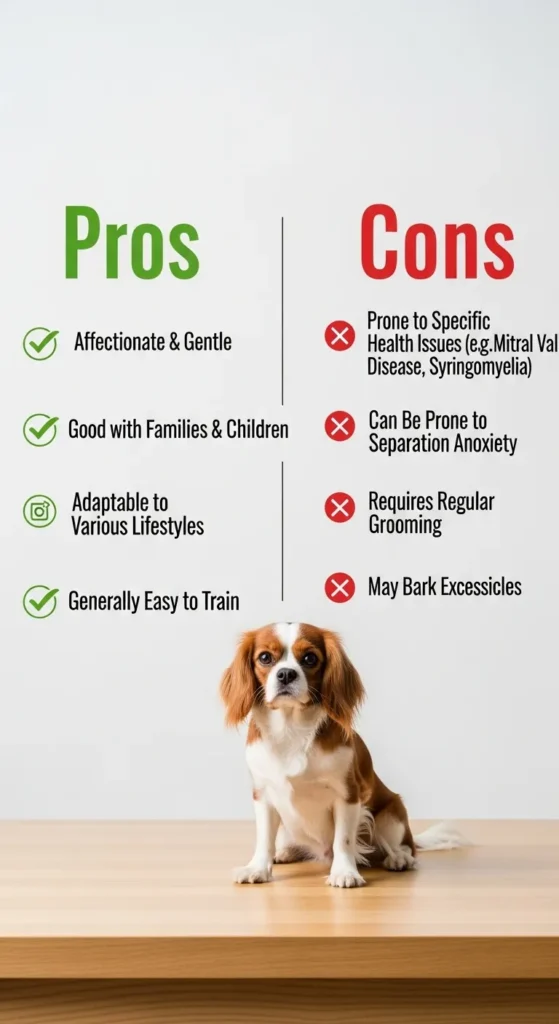
1. Most wonderfully loving and tender.
Cavaliers are true “love bugs.” They strongly emotionally bond with their humans and are known to be highly well-behaved with children, the elderly, and other pets.
2. Flexible to a Multitude of Living Conditions.
Cavaliers adapt both in an apartment in the city and in a house with a yard as long as they receive sufficient affection and exercise.
3. Witty and willing to accommodate.
They are easy to train as they are intelligent and gentle, unlike many toy breeds. They are highly responsive to positive reinforcement and are sensitive to soft directions.
4. Middle-level Energy and Exercise Requirements.
Cavaliers like to take walks daily, play in short bursts, and every now and then have adventures, but are not that strict.
5. Superior Emotional Comrades.
They are great therapy dogs because they are intuitive and empathetic. Cavaliers feel the mood of their owner and provide him with comfort when he is stressed or in a bad mood.
Downsides of Cavalier King Charles Spaniels.
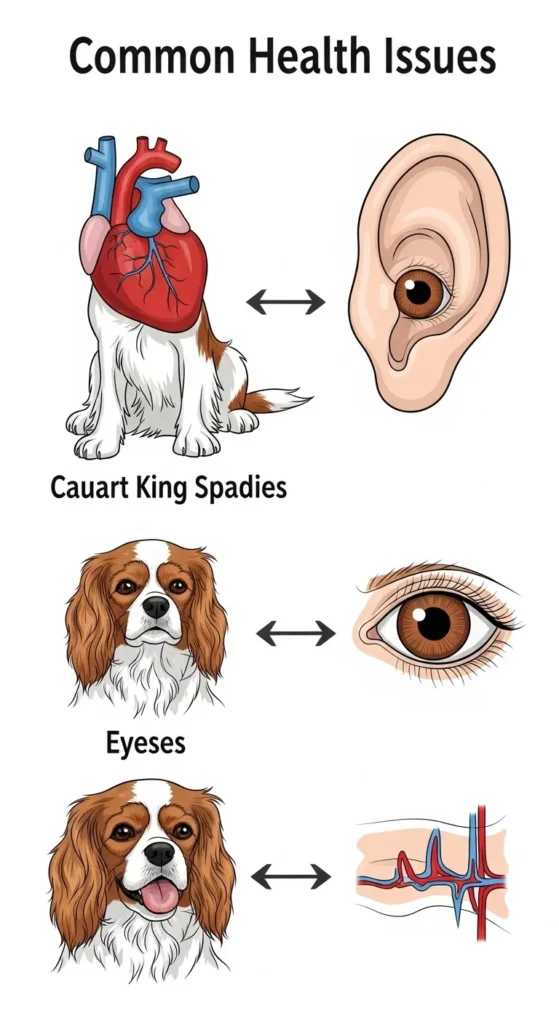
1. At Risk of Major Disease of the Heart.
The largest health issue with the breed is mitral valve disease (MVD) – a progressive heart disease which may result in congestive heart failure. Vets encourage regular heart examinations at an early age.
2. Genetic Disorders and Health Hazards.
Other than MVD, the Cavaliers would also be susceptible to:
Syringomyelia (SM): An unpleasant condition of the nervous system.
- Ear infections: This is caused by the floppy ears that trap the moisture.
- Eye disorders: Cataracts and dry eye.
3. Separation Anxiety
They also do not like being alone since they are loving. Isolation may lead to anxiety, destructive behavior, or excessive barking, especially when spent over long hours.
4. Moderate Grooming Needs
They need to be brushed (3-4 times a week) and groomed by a professional groomer after every several months in order to avoid mats and tangles because of their silky coats.
5. Shedding and Allergies
Cavaliers are non-hypoallergenic. They also lose hair all year round, and this may be difficult for the allergic homes.
Vet-Verified Insights: What Experts Recommend.
Veterinarians focus on the need to screen their health earlier and to make sure that they have regular preventive health care. As far as the American Veterinary Medical Association (AVMA) and Cavalier King Charles Spaniel Club USA claim responsible ownership, it consists of:
Cardiac checkups every year since the age of 2.
- Routine dental cleaning- Cavaliers are likely to accumulate tartar.
- A diet to lose weight and reduce the burden on the joints and heart.
- Light mental activity by way of training or food puzzles.
Gradual desensitization training of puppies is also recommended by veterinary behaviorists in order to decrease separation anxiety in the later stages of these animals.
Common Mistakes to Avoid
- Disregard of the signs of early heart murmur.
- Seyschwammer (Cavaliers gain weight readily).
- Missing professional make-up classes.
- Following the punishment-based training.
- Allowing them to spend long hours alone.
- Purchasing breeders who are not certified.

FAQ’s
Are Cavalier King Charles good family dogs?
Yes! Cavaliers are good companions, loving and kind to children and other pets, hence they are very affectionate companions of the family.
What is the required amount of exercise for the Cavaliers?
They have an average day activity level, approximately, 30-60 minutes of walking or play keeps them healthy and happy.
Do Cavaliers bark a lot?
They are not very vocal, as a rule, but they can be attention seekers, or left alone too long.
What is the lifespan of Cavalier King Charles Spaniels?
They have an average lifespan of 9-14 years, which is subject to both genetics and prevention.
What is the frequency with which I should bring my Cavalier to the vet?
Checkups are necessary every year, though, as your Cavalier gets older, heart monitoring may need to be done twice every year.
Closing Thoughts
It is a real pleasure to own a Cavalier King Charles Spaniel; they provide unconditional love, loyalty, and company. However, their physical and emotional conditions require knowledgeable treatment and frequent veterinary attention. In her care, proper diet and plenty of love, you will see your Cavalier pay you years of tail swings, cuddles, and undying affection.