Cavalier King Charles Spaniels are born with hearts, and hearts are captured by their eyes, which are silky, and their gaze, which melts hearts. There is nothing purer in pet parenthood than to watch these loving, tender pups grow. However, knowing the stages of development of your Cavalier, such as a small puppy or a beautiful adult, is the key to the healthy formation of the animal, correct nutrition, and good treatment.
Table of Contents
Each stage of development is important. From the early stages of socialization to your skeletal structure and heart condition, monitoring the growth of your Cavalier King Charles Spaniel helps you address problems at an early stage and ensure that your pup grows up a happy and healthy adult.

Growth can be viewed as the physical and maturity transformations that occur in your Cavalier between the time of birth and maturity. It includes:
Physical development: skeletal, muscular, skin, and size.
- Behavior development: learning, socialization, and emotional maturation.
- Health milestones: dental development, heart and joint development, and reproductive maturity.
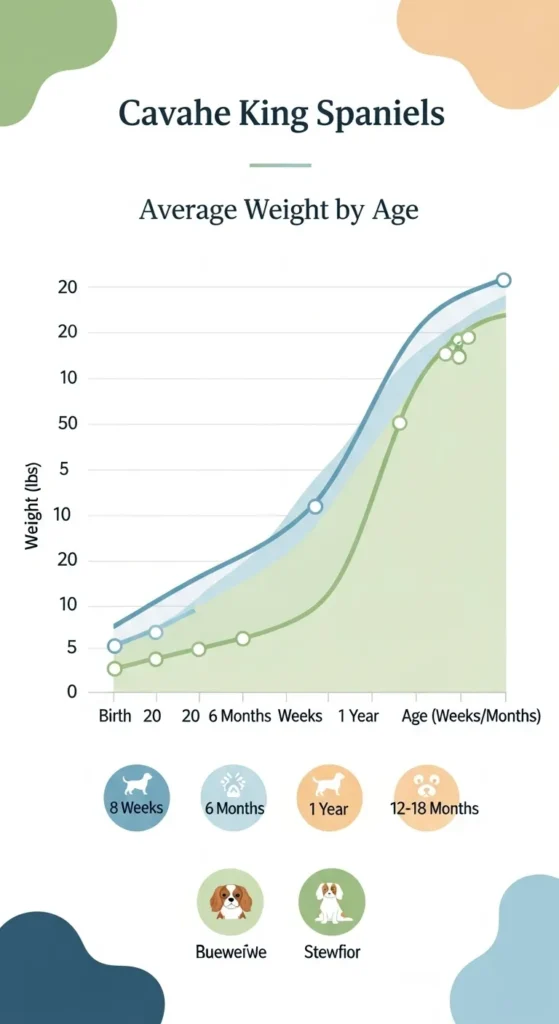
Cavaliers are on average full adult height and weight at 12-18 months, though some still put on weight until they are two. Knowing these growth phases will help the pet owners to adapt feeding, training, and visits to the veterinarian.
The importance of Growth Tracking to Cavalier King Charles Spaniels.
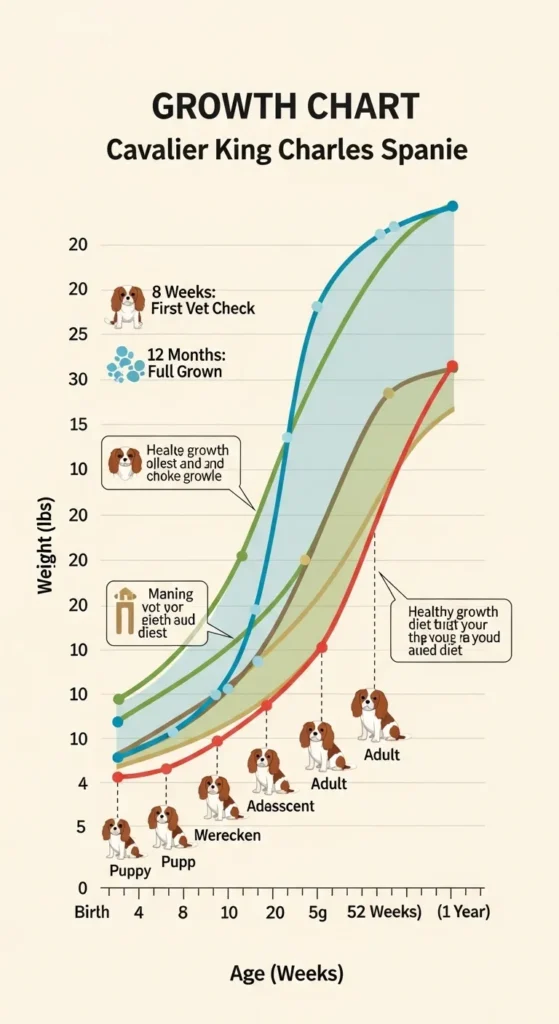
Growth does not necessarily only refer to size- it is a measure of the well-being of the dog in terms of all its growth. Cavaliers are small and delicate dogs that have certain health predispositions (such as heart and joint problems), and that is why it is important to monitor their growth.
Here’sHere’s why it matters:
- Early diagnosis of health problems like mitral valve disease (MVD) or joint issues.
- Healthy weight and bone growth are guaranteed by balanced nutrition.
- Timi, the timing behavior assists in the success of socialization and training.
The prevention of overfeeding will help avoid obesity, which increases the stress on the heart and movement.
History: Cavalier King Charles Spaniel Developmental History.
Each Cavalier develops in his or her time, and the majority of them have a general pattern of development.
- Age
- Average Weight
- Developmental Stage
- 0-2 weeks (0.5-1 lb)
The infants are totally dependent on the milk of their mother. Eyes closed.
- 3-4 weeks (1-2 lbs)
This is the time that the eyes are open and the first steps are made; it is the beginning to learn to play and to bark.
- 6-8 weeks (2-4 lbs)
Introduction of socialization; pup change of food.
- 3 months (5-8 lbs)
Fast increase, mischievousness, and teething begin.
- 6 months (9-12 lbs)
In the middle stage, beginning obedience and social training.
- 9 months (12-15 lbs)
Adolescent behaviors are experienced near adult size.
- 12-18 months (13-18 lbs)
Grown up; the muscles become toned and the coat is fully grown up.
Adult men tend to be slightly heavier than women, yet they are all slim and graceful.
The way to recognize a healthy growth.
A healthy Cavalier does not develop suddenly. The progress can be tracked by:
- Body Condition Scoring (BCS): The scale used by the veterinarians to establish whether your dog is underweight, healthy, or overweight is 1-9. As a rule, the ribs of your Cavalier are to be felt but not seen.
- Monthly Weight Checks: Have a pet scale or go to the vet clinic and weigh your puppy. Maintain a growth chart in order to identify abrupt gains or losses.
- Appetite and Energy Levels: Strong, healthy puppies are full of energy and playful jolts of energy and sleep in between. The medical problems may be indicated by the loss of appetite or a feeling of drowsiness.
- Digestive Health: Stool is normal, firm whic,h implies good digestion. The presence of loose stool or vomiting might indicate an imbalance in the diet or a food allergy.
Guidelines at each developmental period.

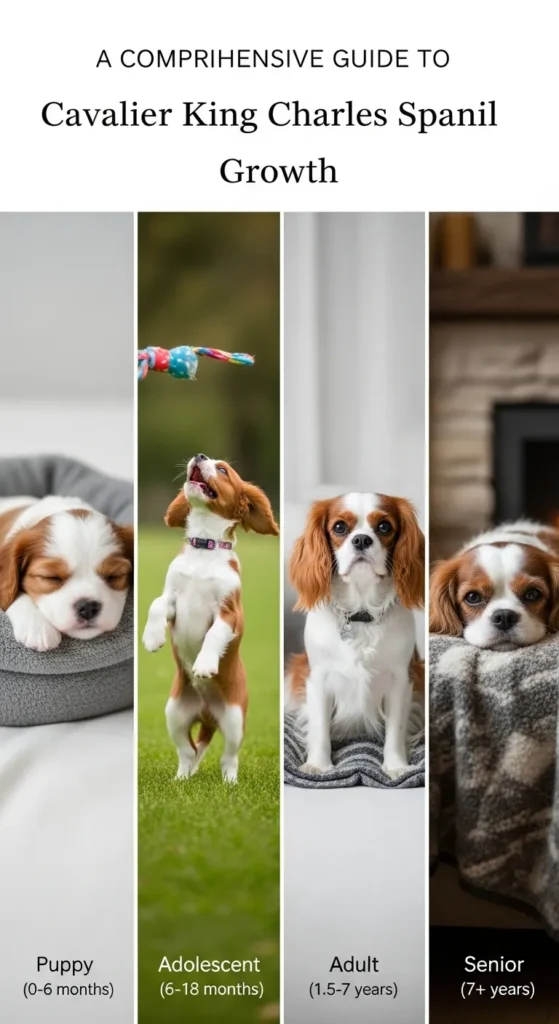
1. Puppy Stage (0-6 Months)
- Nutrition: Feed a small-breed puppy formula of high quality that is approved by the vet. Puppies require more protein and energy.
- Training: socialize him at a tender age – introduce him to kind people and pets, and sound.
- Vet Visits: Make appointments to have vaccinations, parasite treatment, and an early heart check.
2. Adolescent Stage (6-12 Months)
- Exercise: Cavaliers moderate energy. Give short walks and play without taking too much.
- Teething Management: Use soft chewable articles to alleviate discomfort.
- Diet: Moving slowly, from 10-12 months, onto adult food.
3. Adult Stage (12+ Months)
- Weight Maintenance: check portions- cavaliers put on weight very easily.
- Hygiene: Brush 3-4 times a week to keep matted and tangled hair away.
- Dental Hygiene: Start brushing daily so that there is no accumulation of tartar.
Vet Insights & Expert Notes
Not only do breed experts and veterinarians point out that the growth patterns of Cavaliers are directly related to the health of the heart and the state of the body. The owners are expected to:
- Do heart screening annually since the age of two.
- Do not grow fast, as this puts a strain on the joints and the heart.
- Select omega-3s and antioxidants in formulas to maintain cardiac and joint health.
- Adding of veterinary guidance should include only: excess calcium would be toxic to growing bones.
- It is strongly advised to take the puppy to the vet every 6 months.
Common Mistakes to Avoid
- Free-feeding or over feeding puppies.
- Moverfeedinghood socialization (results in shyness or anxiety).
- Disregard of slow or excessive growth trends.
- Oversupplying puppies (can put joints under stress).
- Eating low-quality dog food, which is short of vital nutrients.
- Postponing the veterinary examinations about growth issues.
FAQ’s
At what age do Cavalier King Charles Spaniels cease growing?
The majority of the Cavaliers attain the adult size between 12-18 months of age, although the process may extend to the age of two.
What size Cavalier should he be at 6 months?
The average weight is 9-12 lbs, but it depends on the genetics and diet a little.
Whom do I know is fat, my Cavalier?
You must not press too hard with the ribs. An observable waistline (when viewed down) is an indicator of good weight.
Suppose my Cavalier is less than average?
A small size can be the norm, though; it can also be ruled out by your vet, e.g., malnutrition or parasites.
When is the right time to stop feeding on puppy food and use adult food?
Gradually, at 10-12 months, unless otherwise directed by your veterinarian.
Closing Thoughts
Raising a Cavalier King Charles Spaniel is a process that brings happiness, kisses, and achievements. It means that you will help your pup to grow at each level, as you will feed it properly, treat it regularly, and love it. Keep in mind, it is not the size, but the growth that makes the basis of lifelong health and happiness.