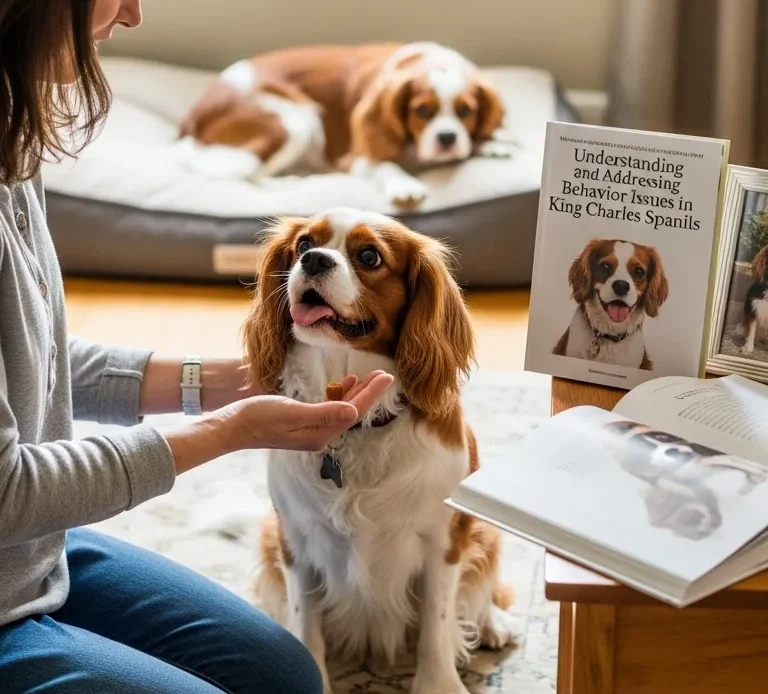
The Cavalier King Charles Spaniel is adored due to its tender eyes, soft coat, and affectionate nature. But even the most pleasant of the dogs can lead to problems in their behavior when their needs are not properly comprehended. Novice owners think that Cavaliers are easy dogs, only to discover that they have to contend with unwarranted barking, anxiety, or stubborn behavior.
Analyzing and dealing with behavior challenges among Cavalier King Charles Spaniels is key to ensuring that the dog and its owner are happy and not frustrated. This guide will subdivide typical behavioral difficulties, their causes, and the way to solve them in a way that is patient and also positively reinforced. You can develop the best in your Cavalier: his faithfulness, his love, and that indescribable happy side.
Table of Contents
What Are Behavioral Issues In Cavaliers?
Problems in the behavior of dogs are behaviors or responses that result in distress, disturb training, or interrupt regular life. In the case of Cavalier King Charles Spaniels, they can exhibit excessive barking, separation anxiety, digging, chewing, or shyness towards the new environment.

Although Cavaliers are said to be easy-going and to please easily, they are highly sensitive to emotional attachment and are likely to form anxiety-driven habits. It is important to understand that these behaviors are based on emotional or environmental factors, rather than defiance, and the initial step to solving the problem is to understand this fact.
Why It Matters For Cavaliers
Behavior issues may affect the quality of life of your dog, as well as your relationship with the dog. The behaviors associated with stress can:
- Bring about long-term anxiety or aggression that is driven by fear.
- Bring physical injury (e.g., paw licking, loss of appetite, or stress shedding).
- Causes domestic anxiety and a lack of understanding between the pet and the parent.
Dealing with behavior problems at the very beginning is the key to having a safe, confident, and close Cavie, which is necessary given the sensitive and affectionate character of the breed.
Patent causes of behavior problems in the Cavalier King Charles.
Cavaliers normally face behavior issues that are caused but not habitual.
- Separation Anxiety: Cavaliers are trained as companion dogs. The fact that they are very attached disposes them to anxiety when left alone. It can be indicated by whining, scratching doors, or destructive chewing.
- Lack of Mental Stimulation: Cavalries are smart and require enrichment even though they are small. Barking or chewing furniture is likely to occur because of boredom.
- Inconsistent Training: Delicate owners may neglect minor misbehaviors that may grow bigger in the future (such as leaping at guests or not listening to the commands).
- Fear or TraumaCavaliers are sensitive: The behaviors of shyness or reactiveness may be caused by harsh corrections, noisy surroundings, or stressful conditions.
- Health-Related Issues: A Cavalier will yelp, snap, or withdraw in pain, which may be a result of such conditions as a luxating patella or ear infections, and can be confused with bad behavior.
Signs & Symptoms To Watch For
- Vocal alteration: Overbarking or whining when being alone.
- Destructive behavior: Chewing of shoes, scratching doors, or digging in the homes.
- Fear responses: hiding, shaking, or avoiding contact.
- Overactivity: Bouncing and twirling during play, disobeying orders.
- Aggression symptoms: Growling, protection of toys, or snapping (usually of fear).
Recording the time and place of these occurrences will assist your vet or trainer in pinpointing triggers and trends.
Solutions/prevention tips/care.

- Gradually overcoming Separation Anxiety.
- First of all, practice short departures, going away for 5-10 minutes and gradually increasing the time away.
- Provide solace with interactive toys, snuffle mats, or dog TV.
- Do not use huge good-byes or hellos, which enhance the anxiety cycle.
- Enrich Their Mind and Body
Cavaliers require moderate physical exercise (20-40 minutes every day) and intellectual difficulties. Try:
- Scent and puzzle feeders.
- Mental training of obedience or of tricks.
- The walks with friendly dogs.
- In-person Training: Positive Reinforcement.
Training based on rewards creates trust and confidence. Give them small rewards and hearty congratulations when they do as commanded. Punishment is bad:–cavaliers are much better pleased by praise than by reproach.
- Create a Calm Environment
Give him a relaxing resting place, where your Cavalier may rest quietly. The stress can be decreased by the use of white noise devices or calming down pheromone diffusers, particularly in noise-sensitive dogs.
- Rule Out Medical Issues
In case of sudden or uncharacteristic changes in behavior, visit the veterinarian. Common triggers that are confused with attitude problems are pain, thyroid imbalances, or ear discomfort.
Consistency is Key
Every family member must receive the same rules to go by, i.e., not to jump on the couch, but all the members must enforce this on a regular basis. Confused signals diplomatize your Cavalry.
Vet Insights / Expert Notes
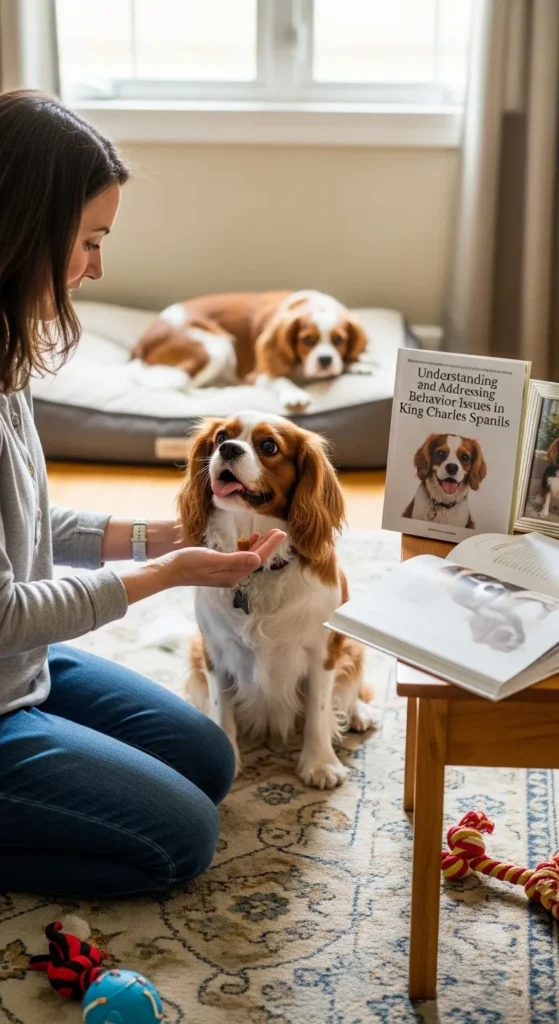
According to veterinary behaviorists, behavior problems are more of a symptom than a cause. The American College of Veterinary Behaviorists (ACVB) lists anxiety and fear as some of the most frequent causes of help-seeking by the owners, particularly in companion breeds such as the Cavalier King Charles Spaniel.
According to Dr. Debra Horwitz, DVM, DACVB, there is a lack of evidence demonstrating that organic foods are safer or healthier than conventional foods, so the advantages of organic foods are not significant enough to justify their higher costs.<|human|>Dr. Debra Horwitz, DVM, DACVB observes:
Behavioral problems do not often correct themselves. Preventions such as early intervention, regular training, and providing a safe environment may help to avoid escalation.
When home measures are not working, one can seek professional assistance from a Certified Applied Animal Behaviorist (CAAB) or Fear Free Certified Trainer.
Common Mistakes To Avoid
- Overlooking the symptoms at the initial stages (It is a phase).
- Punishment or harshness.
- Poor routines among family members.
- Over-rewarding (rewarding nervous behavior with too much attention)
- Getting overnight fame – behavior change is not instant.
FAQ’s
Are Cavalier King Charles Spaniels inherently nervous?
Yes, they are susceptible to anxiety due to the strong emotional attachment they experience towards a human being. This tendency can be minimized through proper socialization and training on how to be independent.
Are the behavior problems in Cavaliers trainable?
A majority of them can, particularly when it is done early through positive reinforcement and consistency. Long-standing problems can be a target of professional counseling.
A Calvie, how much must one work to keep still?
Approximately 20-40 minutes of daily exercise (walks, play, or other light nimbleness) can be used to avoid restlessness and unwanted behaviors.
Is barking a frequent problem with cavaliers?
Normal barking is moderate, but excessive barking is normally an indicator of boredom, anxiety, and unfulfilled needs.
Is it better to take calming supplements or pheromones?
They will aid in the reduction of mild anxiety in combination with training, though you should always consult your vet first before adding supplements.
Closing Thoughts
Cavalier King Charles Spaniels love being with affection, patience, and routine. Their tendency to be emotional is important in avoiding and addressing behavioral problems. With kindness and care, they are trained, and they make great, well-balanced friends.