When I was a child, I read about a very handsome Cavalier King Charles Spaniel and how much they are attached to their owners. They are the type of dogs that come after you through the various rooms, lie next to you on the couch, and survive on love. However, at times, dog owners ask themselves the question, ‘Is it possible to keep Cavalier King Charles Spaniels outdoors?’
It is a very significant question for families living in warm climates or with big yards. But the thing is that Cavaliers do not live in the open air. This paper will describe why, according to veterinary and behavioral studies, and provide safe ways to let your Cavalier enjoy plenty of fresh air while keeping it healthy, happy, and attached to you, where it belongs.
Table of Contents
WHAT is the meaning of Living Outside?
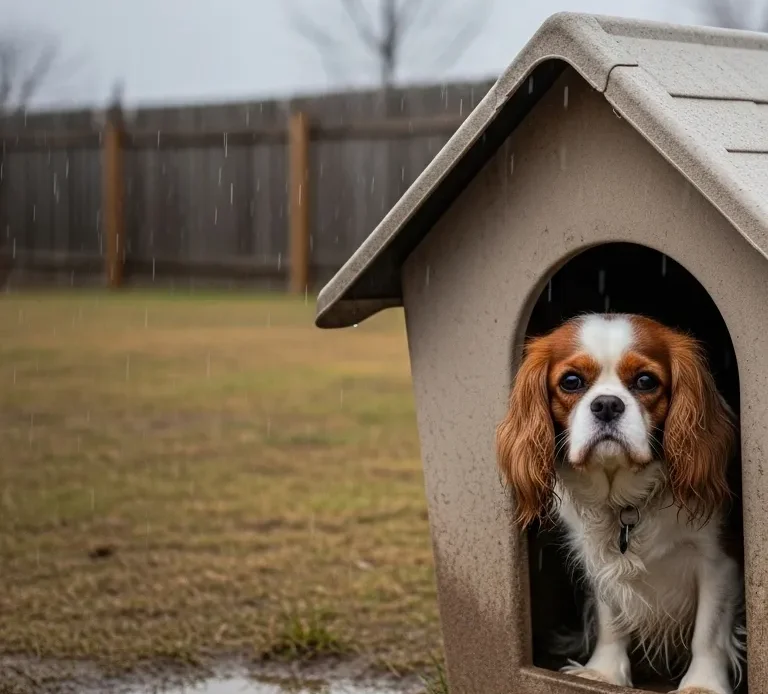
When we say that a dog is living outside, it refers to the fact that a dog spends most of its time outside – sleeping, eating, and resting in an open space or a kennel, but not in a house.
There are some cold-weather and independent breeds, such as Huskies or the Great Pyrenees. Nonetheless, the Cavalier King Charles Spaniel was not a working or guard dog but a companion dog breed. They feel best when they are inside, among people and in a comfortable environment.
A Cavalier is able to definitely spend some time outdoors walking, playing, or even napping in the sun, but within the family, they must always live.
WHY IT MATTERS FOR DOGS
The physical, emotional, and behavioral well-being of a dog are influenced by its living environment. In the case of Cavaliers, which are very social people, with a high level of emotional sensitivity, being secluded or exposed to outdoor dangers can cause severe effects, such as:
- Lack of companionship brings about anxiety and loneliness.
- Health problems related to their temperature are common due to their medium-sized coat and small size.
- Contact with pests and toxins may cause allergies or illnesses.
- Desire to exhibit bad behaviors, e.g., to bark too much or to be destructive.
That is, Cavaliers prefer to rely on human contact and comfort in order to remain balanced and happy.
Breed Background: Why Cavaliers Are Indoor Dogs.
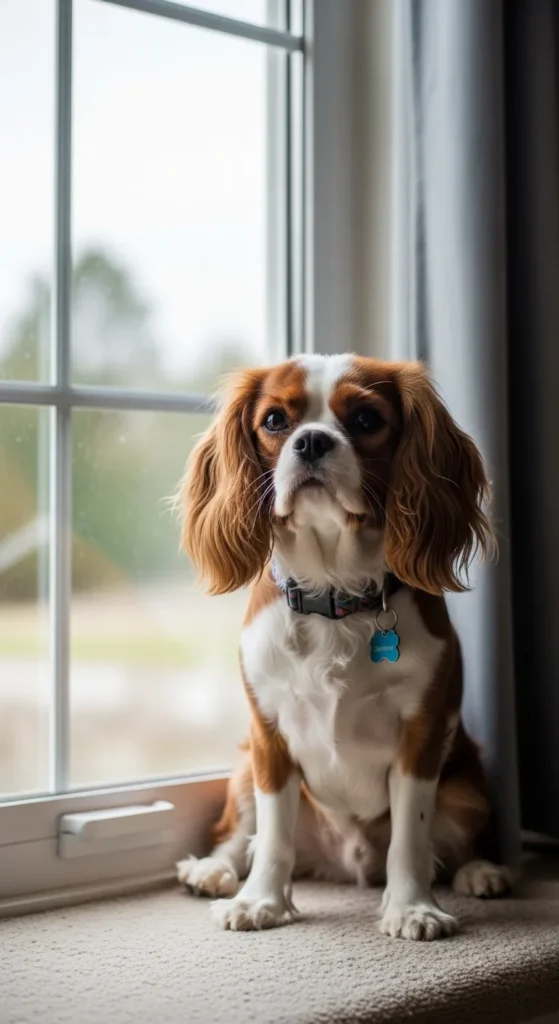
The history of the Cavalier King Charles Spaniel is the reason why they are not suited for outdoor activities.
- Raised to Be Pet Corals, Not Work Horses.
In the 17th century, cavaliers were often raised in royal courts as pets. They were not supposed to hunt, herd, or protect; they were supposed to comfort and provide companionship. This strong attachment to human beings is still embedded in their genes.
- Responsible for Climatic fluctuations.
The coat of cavaliers is medium-long and silky, appearing plush, although it does not provide much insulation. They cannot withstand extreme temperatures and are not suitable for hot or cold conditions.
Cold weather: They do not possess an undercoat, as true cold-weather breeds do, and they are susceptible to hypothermia.
Hot weather: Cavalries are prone to overheating and are likely to experience heat exhaustion and difficulty breathing in hot and humid weather.
- Dependent Temperament
Cavaliers are also known to be very loving and are said to be Velcro dogs, in that they always seem to be near their owners. They can be emotionally distressed when kept out, and this may result in anxiety behaviors such as whining, pacing, or digging.
Signs Your Cavalier Is Ploughing Outside.
When your Cavalier is out a long time, be on the lookout for these signs that he is unhappy or in danger:
- Shivering or trembling means you are too cold.
- What can also occur is excessive panting or drooling, which may be a result of overheating.
- Crying, screaming, scribbling at doors – distress or solitude.
- Hiding or seeming apathetic can signal danger or exhaustion from temperature changes.
- Shedding too much, reddening, or scratching — may be evidence of sunburn or insect stinging.
- The signs of these are plain, that your Cavalier must be brought into doors.
Cavalcade Outdoors Riding: How to Provide Your Rider With Secure Time.
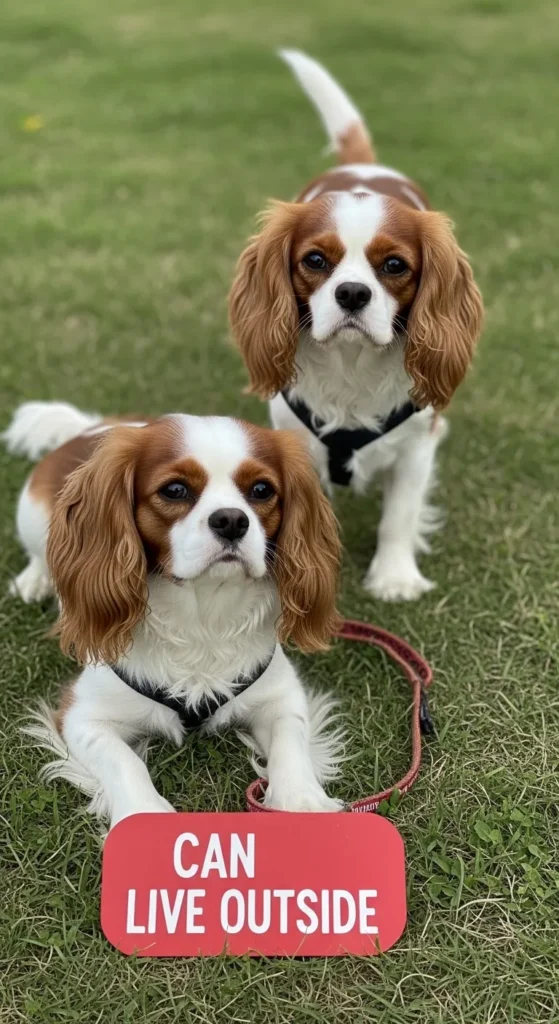
Your Cavalier can certainly like being outdoors, and it only needs to be controlled, comfortable, and time-restricted. Here are the ways to make the outside activities safe and enjoyable:
- Provide Shade and Shelter
When your Cavalier is resting outside, ensure there is plenty of shade and fresh water available. Overheating can be prevented with the help of a shaded patio, a covered porch, or a dog-safe gazebo.
- Restrict Outdoor Play during Severe weather.
Take care not to spend too much time outdoors when the temperature is under 50°F (10°C) or over 85°F (29°C). During the summertime, schedule play sessions for early morning or evening to avoid heatstroke.
- Keep Them Mentally Engaged
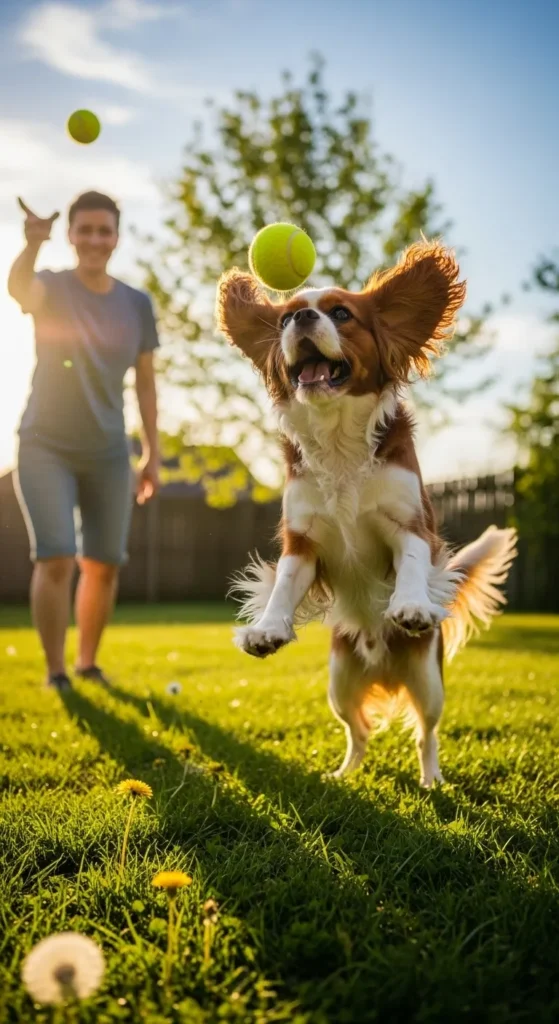
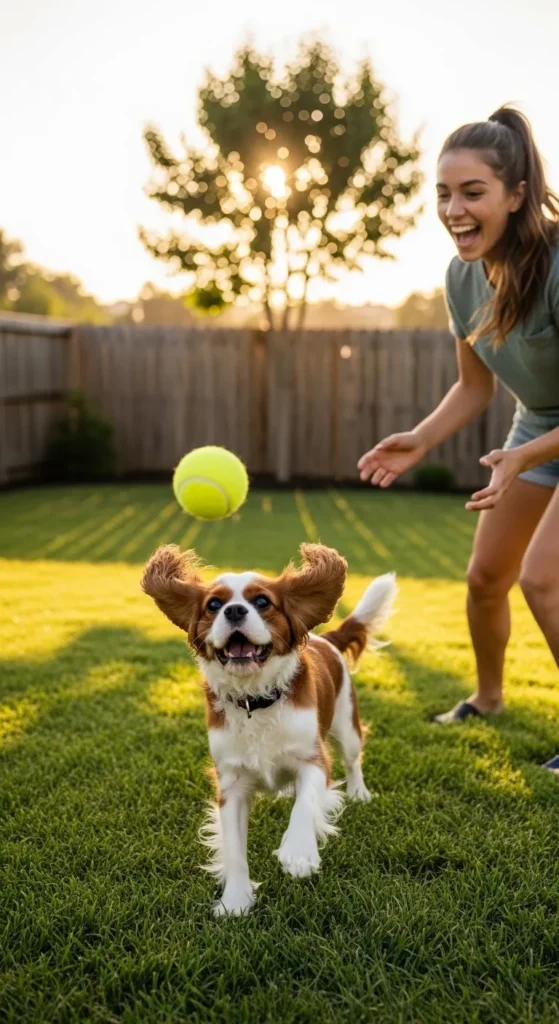
Cavaliers love outdoor games such as fetch, hide-and-seek, and agility courses. They adore learning and playing, and therefore, outdoor time is more rewarding through mental enrichment.
- Use Safe Fencing or Leashes
Cavaliers are also playful and can pursue birds or squirrels. Always monitor any fenced play area and wear a well-fitted harness or leash on walks.
- Maintain Pest Protection
Due to the long coats that Cavaliers wear, they are prone to harboring fleas, ticks, and mites in their fur. Have them on parasite prevention that is approved by a vet, even on a year-round basis, even though they may be outdoors only a short time.
Vet Insights & Expert Notes
As veterinary experts and the American Kennel Club (AKC) say:
- Cavaliers are indoor pets that require close proximity to their owners in order to thrive.
- Extended outdoor activities may cause heatstroke, hypothermia, and anxiety.
- Cavaliers should have indoor sleeping areas and supervised outdoor walks or play. These are ideal living conditions.
- Dogs that spend their time outdoors should be groomed frequently, hydrated, and protected from heartworm.
Dr. Karen Becker, DVM, shares the same opinion that companion breeds, such as Cavaliers, may suffer emotionally due to loneliness. Dogs are pack animals – they require closeness, and not aloofness.
Common Mistakes to Avoid
- Keeping a Cavalier outside at night – he can soon get cold or frightened, or sick.
- They think that because they have fur, they will be all right – Cavaliers do not have weather-proof coats.
- Omitting the pest prevention – even short grass may contain fleas and ticks.
- Failing to take into account their emotional needs, Cavaliers require companionship and human contact.
- Boxing food or water in the sun – it may be dehydrated or contaminated.
FAQ’s
Can Cavalier King Charles Spaniels sleep in a dog house?
No. Cavaliers do not like to sleep outdoors, even in a warm, sheltered area. Their coats are not sufficient to keep them warm, and they require the comfort and security of their family.
Is the Cavalier able to cope with cold weather?
They also withstand cold conditions to a certain extent, but not in freezing temperatures. When it gets cold in winter, put them in dog sweaters or jackets and limit their time outside.
Shall I leave my Cavalier outside for a few hours?
Yes, but it should be controlled, and the weather conditions must be mild. Always offer shade, water, and a safe enclosure.
Are the Cavaliers outdoor lovers?
Absolutely! They enjoy outdoor games and inhaling fresh air, then returning home to spend time with their family.
What is the dangerous temperature of the Cavaliers?
Temperatures lower than 45°F (7°C) or higher than 85°F (29°C) may be risky, particularly for older dogs or puppies.
CLOSING THOUGHTS
Cavalier King Charles Spaniels also enjoy going out to explore, but they are better suited to indoor living, both in terms of heart health and overall well-being. These are loving friends who live on warmth, love, and human intimacy. So, though your Cavalier undoubtedly must have his playtime in the fresh air, always remember to bring him back inside. Since at nightfall, a Cavalier is not home in the yard–but right by you.